





Top 5 Door Materials for Maximum Home Security
June 14, 2024
12 Types of Glass for Windows You Need to Know About
June 25, 2024

Windows play a critical role in defining the performance and appearance of commercial buildings. They influence natural light, insulation, safety, and the overall identity of a space.
For offices, hotels, retail outlets, and high-rise buildings, selecting the right window material is essential. The demand is not only for aesthetics but also for durability, efficiency, and long-term value.
uPVC windows have become a preferred solution in commercial construction due to their strength, insulation performance, and low maintenance requirements. This blog explains why they suit commercial buildings and how they meet modern construction needs.
Table of contents
uPVC Windows for Commercial Buildings: Meaning & Overview
In commercial construction, window systems are expected to handle continuous usage, large glass spans, and demanding environmental conditions. Performance, safety, and long-term reliability are key considerations for builders and property owners.
uPVC windows and doors are widely adopted in commercial buildings because they meet these requirements without adding maintenance complexity. Their structural stability, insulation performance, and compatibility with heavy-duty glazing make them suitable for offices, retail spaces, hotels, and high-rise developments.
Why they are commonly used in commercial projects:
Support for large and thick glass panels
Consistent performance in heat, wind, and pollution
Minimal maintenance over long operational cycles
Also Read: Why Architects and Builders Prefer Laminated uPVC Windows and Doors: Designs, Benefits & Uses
TYPES & VARIANTS
uPVC sliding windows
Used in offices and retail spaces where space efficiency and smooth operation are required.
uPVC casement windows
Suitable for commercial buildings that need better ventilation and airtight sealing.
uPVC tilt and turn windows
Common in high-rise buildings for controlled ventilation and ease of maintenance.
WHAT COMMERCIAL BUILDINGS REQUIRE FROM WINDOWS
Commercial buildings demand higher performance standards compared to residential spaces.
Key requirements include:
Structural safety and security
Thermal insulation and energy efficiency
Support for thicker glass (6mm to 12mm)
Long-term durability under heavy usage
uPVC windows are designed to meet these functional and structural requirements effectively.
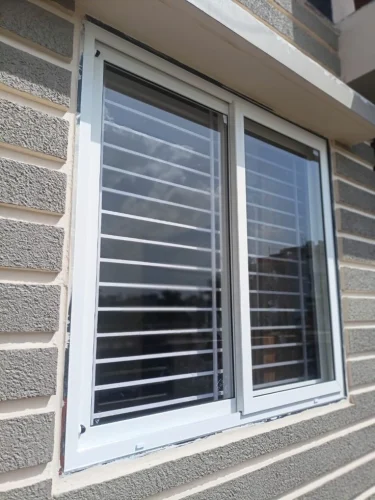
BENEFITS OF uPVC WINDOWS FOR COMMERCIAL BUILDINGS
Superior durability and weather resistance
uPVC windows can withstand harsh sunlight, wind, rain, and pollution without warping or corroding.
Suitable for Indian climate conditions
Lifespan of 20–30 years
Enhanced security for commercial spaces
These windows can be equipped with:
Galvanised steel reinforcement
Thick safety glass
Low and easy maintenance
Unlike wood or aluminium, uPVC windows do not peel, rust, or require repainting.
Quality with affordability
Despite their premium performance, uPVC windows remain cost-effective due to low maintenance and reduced energy expenses.
High energy efficiency and insulation
The multi-chamber design of uPVC windows helps maintain balanced indoor temperatures and reduces electricity consumption.
Sound insulation for commercial environments
These windows reduce external noise, creating comfortable interiors for offices, hospitals, and hotels.
Eco-friendly window solution
uPVC windows are recyclable and offer long service life, making them a sustainable choice for commercial construction.
Design flexibility and customisation
Available in multiple styles, colours, and glazing options to match commercial interiors.
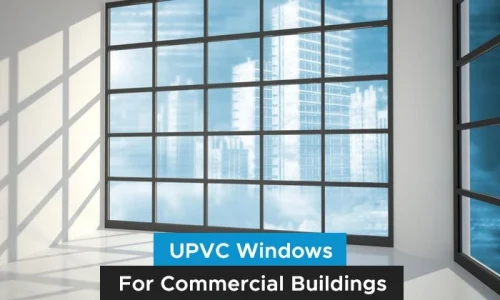
uPVC WINDOWS VS TRADITIONAL MATERIALS IN COMMERCIAL BUILDINGS
Key differences
Durability: uPVC outperforms wood and aluminium
Maintenance: Requires minimal upkeep
Energy efficiency: Better insulation performance
Cost: Lower long-term operational expenses
Which option works better for commercial buildings?
For buildings prioritising durability, efficiency, and reduced maintenance, uPVC windows offer more reliable long-term performance.
WHY CHOOSE GREENFORTUNE FOR uPVC WINDOWS
GreenFortune provides end-to-end solutions tailored for commercial projects across India.
Precision-engineered profiles
Reinforced and fire-resistant systems
Customised designs for commercial needs
FAQs
1.What glass thickness is used in commercial uPVC windows?
Commercial applications typically use 6mm glass, while high-rise buildings use 10–12mm glass.
2. Can uPVC windows be used in high-rise buildings?
Yes, they are suitable due to their strength, wind resistance, and insulation performance.
3.Are uPVC windows energy efficient for commercial spaces?
Yes, they reduce heat transfer and help lower energy consumption.
4. Are uPVC windows suitable for commercial buildings in Hyderabad?
Yes, they perform well in Hyderabad’s heat, dust, and humidity conditions.

CONCLUSION
Commercial buildings require window systems that combine durability, safety, efficiency, and long-term value. uPVC windows meet these requirements while offering flexibility in design and reduced operational costs.
As commercial construction continues to grow, selecting durable and efficient window solutions becomes a long-term investment decision. To evaluate suitable designs, specifications, and project-ready solutions, explore options offered by providers of the best uPVC windows in Hyderabad, designed to meet the performance needs of commercial buildings.

