





10 Stunning Tropical Exterior Home Designs ideas
November 20, 2025
Top Reasons to Choose Toughened Glass Windows Over Regular Glass
November 20, 2025

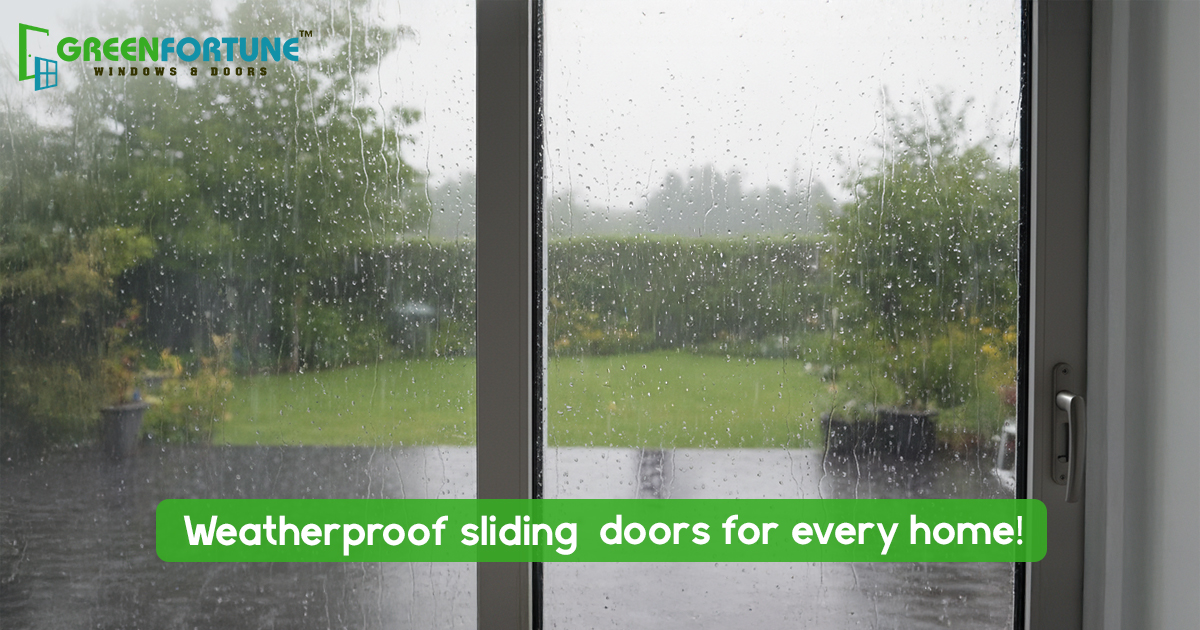
Monsoon is beautiful… until the wind howls through gaps in your doors, water seeps in from the balcony, and tracks rust overnight. If your sliding doors are of low quality, they cannot handle India’s heavy rains and humidity. A good-quality sliding door keeps your home dry, quiet, and peaceful all year long.
In this blog, we will discuss monsoon ready sliding doors, the best materials for the frame, key features to look into before buying a sliding door, common problems, solutions, maintenance tips, and a lot more.
Also read: How to choose windows for Indian climate in 2025?
Table of contents
- What Makes A Sliding Door Monsoon Ready?
- Best Materials For Sliding Doors To Make Them Monsoon-Resistant
- Key Features To Look For In Sliding Doors Before Buying
- Common Monsoon Problems While Using Sliding Doors And How To Avoid Them
- Maintenance Tips To Keep Your Sliding Doors Monsoon-Proof
- GreenFortune’s uPVC Sliding Doors For Monsoon
- Final Takeaway
- FAQs
What Makes A Sliding Door Monsoon Ready?

Sliding doors that are designed to handle the toughest weather conditions, from heavy rains to strong winds and moisture, are considered monsoon-ready. These doors
- Keep out rainwater with tightly fitted seals and advanced drainage paths.
- Stay rust-free and smooth even in high humidity.
- Prevent noise, drafts, and moisture from entering your space.
- Hold their shape and strength despite constant weather changes.
If a sliding door is precisely engineered, meaning each joint, seal, and corner is tested for tightness, there won’t be any leaks, no noise and no sticky tracks.
Best Materials For Sliding Doors To Make Them Monsoon-Resistant
The right material makes all the difference. Here are the top choices that stand strong through every season.
- uPVC (Unplasticized Polyvinyl Chloride)
uPVC is non-corrosive, termite-proof, and weather-resistant. It doesn’t swell, rust, or fade, even in coastal humidity. It provides excellent insulation and soundproofing, making your home peaceful even when it pours outside.
- High-strength aluminium
Aluminium is coated with powder finishes or alloys like Duranium to resist corrosion. They are durable, look sleek, and include weather seals and drainage tracks for proper monsoon protection.
- Tempered or laminated glass
Tempered or laminated glasses are thick, safety-grade glasses that ensure clarity and safety during storms. Many monsoon-ready doors use double-glazed glass, which prevents fogging and helps with insulation.
Key Features To Look For In Sliding Doors Before Buying
When choosing the right waterproof sliding doors for your home, check if the doors come with the following features.
- Double sealing and high-performance gaskets- to block rain and wind completely.
- Multi-point locking system- to ensure an airtight, secure closure during strong winds.
- Rust-proof tracks and smooth rollers- to keep the door gliding effortlessly even in damp conditions.
- Built-in drainage or “rain reack” systems- to carry water away from the frame.
- Pest-resistant materials like uPVC or coated aluminium- to prevent termites and mould.
- Thermal and sound insulation- for a calm, energy-efficient home.
- Robust hardware and fittings like heavy-duty handles, hinges & rollers- to maintain performance even under pressure.
- Long-term durability- to ensure your doors stay strong and stylish for years with minimal upkeep.
Also read: Prepare your home for monsoon: Seasonal home maintenance checklist!
Common Monsoon Problems While Using Sliding Doors And How To Avoid Them
Problem 1: Water leakage or track clogging
Rainwater can collect in door tracks and leak indoors, especially if the slope or drainage is not correct. So, choose doors with built-in drainage channels or “rain track” systems and keep tracks clean.
Problem 2: Rust or swelling
Metal doors corrode, and wooden frames swell in humidity, causing doors to jam. So, opt for uPVC or power-coated aluminium that stays unaffected by moisture.
Problem 3: Foggy glass and mould growth
Condensation builds up in poorly insulated glass, leading to mould growth or damp corners. So, go for double-glazed or laminated glass with anti-fog coating and maintain ventilation indoors.
Problem 4: Difficult sliding movement
During the monsoon, tracks often collect dirt, debris, and moisture, making the doors hard to slide. So, use rust-proof rollers, lubricate them periodically, and ensure smooth track drainage to prevent jamming.
Problem 5: Loose or damaged seals
Rubber seals can wear out or detach due to constant exposure to rain and humidity. This allows for leaks and air gaps. So, inspect seals before every season and replace damaged gaskets with high-quality waterproof ones.
Monsoon ready sliding doors protect your home from rain, noise, and humidity.
Maintenance Tips To Keep Your Sliding Doors Monsoon-Proof

Even the best sliding doors need basic care during the rainy season. A five-minute cleanup once a month can extend your sliding doors’ life by years.
- Clean tracks and drainage holes regularly to prevent blockage.
- Apply silicone sealant around frames if you notice minor gaps.
- Lubricate rollers for smooth movement.
- Avoid harsh cleaning chemicals and use mild soap and a soft cloth instead.
GreenFortune’s uPVC Sliding Doors For Monsoon
If you are ready to upgrade to rainproof patio doors, consider GreenFortune’s uPVC sliding doors. They are manufactured with airtight sealing and rain-resistant frames, require minimal maintenance and offer excellent insulation.
Check out GreenFortune’s uPVC sliding windows price starting at just INR 350 per sq ft.
Final Takeaway
By investing in monsoon ready sliding doors, like the ones from GreenFortune, you can protect your interiors, save on maintenance, and enjoy the beauty of rain from the comfort of your dry, cosy space. No leaks, no rust, and no drama!
Also read: Simple hacks to prevent fungus on wood!

FAQs
1) How much do monsoon ready sliding doors cost?
In India, monsoon-ready sliding doors generally cost between INR 500 and INR 900 per sq. ft for quality uPVC or coated aluminium frames. The price varies based on size, glass type, and customisation.
2) How to weatherproof sliding doors?
To weatherproof sliding doors, apply durable weather-stripping, seal frame gaps with silicone, and clean tracks regularly. Installing drainage channels and anti-rust fittings helps prevent water leakage and ensures year-round airtight performance.
3) How to add security to sliding doors?
Add security to sliding doors by using multi-point locks, track stoppers, and shatter-resistant glass film. You can also install a door alarm or motion sensor for extra safety and peace of mind.
Monsoon Ready Sliding Doors

